This suite of documents explains why community engagement matters in a place-based approach to Net Zero, examines the role Community Benefit Funds play in community engagement for Net Zero projects, explores community engagement in the rural context, and covers the role of digital methods of communication in a rural setting.
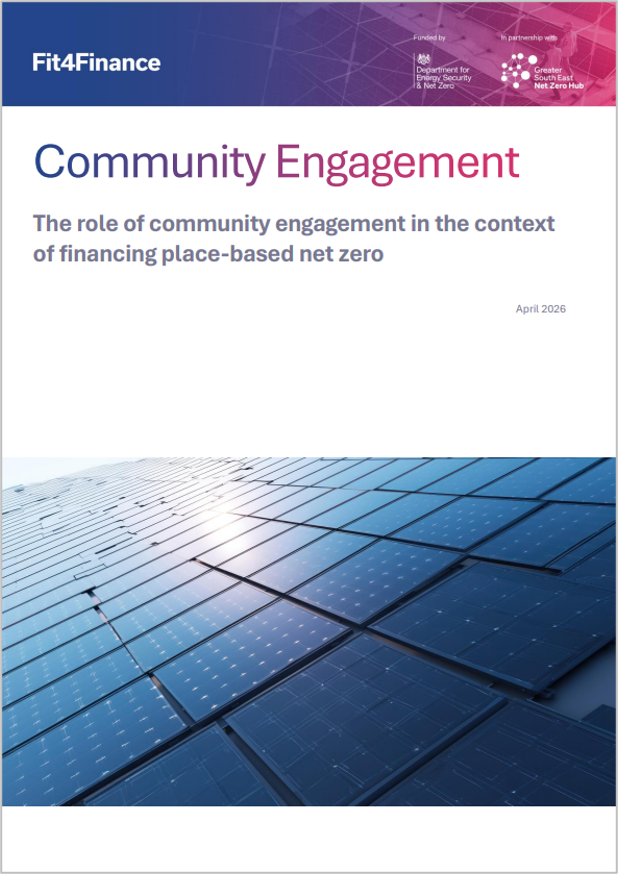
Community engagement: The role of community engagement in the context of financing place-based Net Zero

Community engagement is a fundamental component of successful place-based Net Zero delivery, helping local authorities create projects that are investable, locally supported, and capable of delivering lasting social, environmental, and economic benefits. The guide highlights how communities should be involved from the earliest stages of planning through to delivery and evaluation, ensuring projects reflect local needs, generate wider social benefits, and achieve long-term success:
- Build investor confidence and reduce delivery risk by demonstrating local support, reducing opposition, increasing uptake, and improving the long-term viability of Net Zero projects.
- Develop better place-based solutions through community insight, helping projects reflect local needs, generate social value, improve outcomes, and create stronger investment propositions.
- Follow a structured engagement process based on the 3Ci model of co-planning, co-designing, and co-delivering projects, supported throughout by co-communication and co-evaluation.
- Move beyond consultation towards participation, enabling residents to shape decisions, build local leadership, develop skills, and contribute directly to project delivery.
- Embed trust, relevance, and value within engagement activities through transparent communication, accessible formats, clear feedback mechanisms, and tangible benefits for participants.
- Use Community Benefit Funds strategically to ensure renewable energy developments generate lasting local benefits, supported by transparent governance, inclusive decision-making, and alignment with local priorities.
- Recognise the distinct needs of rural communities, where trust, local networks and community champions often play a central role in overcoming barriers to participation and project development.
- Combine digital and face-to-face engagement methods to reach wider audiences, overcome geographical barriers, and ensure participation remains inclusive and accessible.
- Support local authority officers as enablers and convenors, helping communities access expertise, funding, partnerships, and practical routes from project concept through to implementation.
- Adopt a long-term approach, with sufficient resources, inclusive governance, and ongoing community involvement to maintain momentum beyond individual projects, funding cycles, and political terms.


Fit4Finance resources are designed to help local authorities move from isolated, grant-funded projects to scalable, investment-ready portfolios.
They include diagnostic tools, case studies, training, and investment models to support project delivery, unlock blended finance, and encourage collaboration across finance, climate, housing, and economic development teams.