
This tool helps local authorities apply their own local priorities to assess the heat network delivery models included in the ‘Delivery model suitability assessment for small‑scale heat networks’ report.
Resource
This tool helps local authorities apply their own local priorities to assess the heat network delivery models included in the ‘Delivery model suitability assessment for small‑scale heat networks’ report.
Provided by: Energy Systems Catapult


Heat Network Delivery Model Assessment Tool
This tool helps local authorities understand which small‑scale heat network delivery model best fits their local needs and priorities. It builds on the evidence from the Delivery model suitability assessment for small‑scale heat networks report (part of the PANZ project) and makes that information easy to explore and adapt.
The tool is designed to help teams talk through options and understand their relative strengths. It’s a useful starting point but doesn’t replace detailed commercial, legal, or technical work.
The scoring behind each delivery model is locked so it remains true to the original assessment. The tool only changes how those scores are weighted – not the evidence itself – giving you confidence in a consistent baseline.
The tool lets you highlight what matters most to your organisation – such as control, risk, financial return, or flexibility – by adjusting the importance of different factors. This makes the results more relevant to your local context.
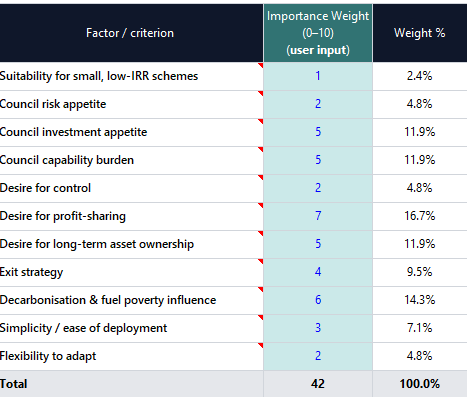
It compares three delivery models using the same underlying evidence and scoring. This gives a consistent starting point for understanding how each option performs across a range of factors.
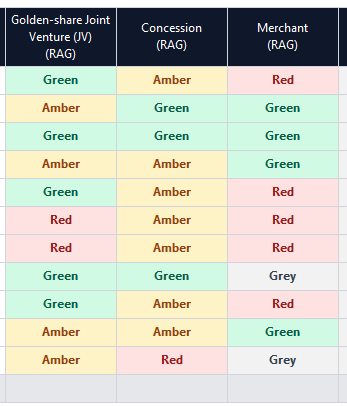
By changing the importance of different criteria, you can quickly see how the preferred delivery model might shift. This makes it easier to explore “what if” scenarios and understand trade‑offs.
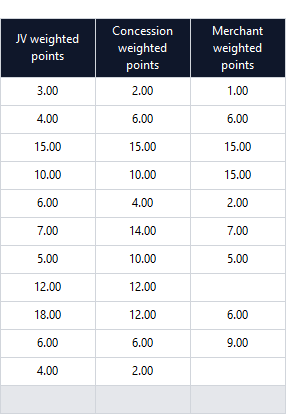
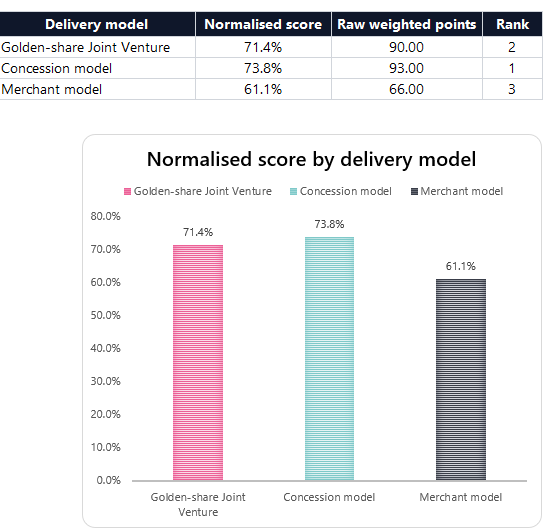
The simple dashboard summarises how well each delivery model matches your chosen priorities. Higher scores mean a closer overall fit. If a model is not affected by a particular factor, that factor is simply left out of the calculation.
ESC is making this report available under the following conditions. This is intended to make the Information contained in this report available on a similar basis as under the Open Government Licence, but it is not Crown Copyright: it is owned by ESC. Under such licence, ESC is able to make the Information available under the terms of this licence. You are encouraged to Use and re-Use the Information that is available under this ESC licence freely and flexibly, with only a few conditions. Using information under this ESC licence Use by You of the Information indicates your acceptance of the terms and conditions below. ESC grants You a licence to Use the Information subject to the conditions below. You are free to:
You must, where You do any of the above:
These are important conditions of this licence and if You fail to comply with them the rights granted to You under this licence, or any similar licence granted by ESC, will end automatically.
Designed to aid Local Authorities in developing robust, evidence-based plans to enable Net Zero.
Already have an account? Login
 Guest preview of selected publicly available resourcesFull library of 1,000+ articlesCPD accredited e-learning coursesCase studiesDiscussion forum