
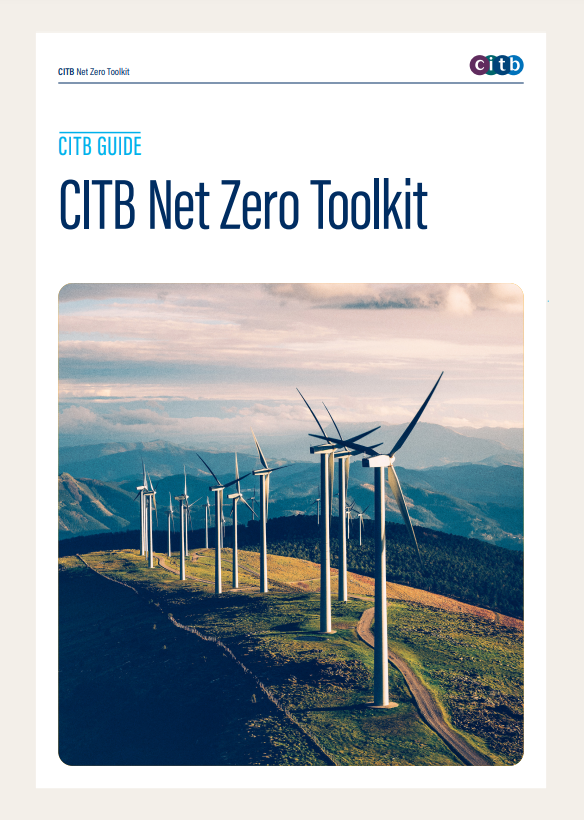
The Construction Industry Training Board (CITB) has created a toolkit for employers to help them navigate Net Zero support and training.
Resource
The Construction Industry Training Board (CITB) has created a toolkit for employers to help them navigate Net Zero support and training.
Provided by: Construction Industry Training Board (CITB)


This toolkit has been created for all professionals in the construction industry. It is designed to make information surrounding skills, training, regulations, and future requirements surrounding Net Zero accessible, easy to understand, and in a single location. The toolkit tackles new builds as well as the retrofit of existing buildings. So whatever your project, you will find relevant information here.
 The UK is firmly on the road to becoming a Net Zero nation by 2050. Becoming Net Zero by this deadline is now enshrined in law. Construction and the built environment is a major source of carbon emissions, representing around 40% of the UK’s total output. This means the construction industry has a big role to play in helping the UK become Net Zero. The UK Green Building Council estimates that up to 95% of emissions from the built environment over the next 30 years could come from existing buildings. Much of the industry’s efforts to decarbonise will be on retrofitting existing building stock. New buildings will also need to be highly energy efficient. How they’re constructed is important, too. Modern methods of construction, and the skills required to achieve this, will become increasingly common and important.
This resource includes information on the following subjects:
Designed to aid Local Authorities in developing robust, evidence-based plans to enable Net Zero.
Already have an account? Login
 Guest preview of selected publicly available resourcesFull library of 1,000+ articlesCPD accredited e-learning coursesCase studiesDiscussion forum