
In this model, heat pump owners are incentivised to shift their energy usage in line with times that energy is cheaper with Smart electricity tariffs.
Resource
In this model, heat pump owners are incentivised to shift their energy usage in line with times that energy is cheaper with Smart electricity tariffs.
Experience Level:
Smart Client
Provided by: Energy Systems Catapult


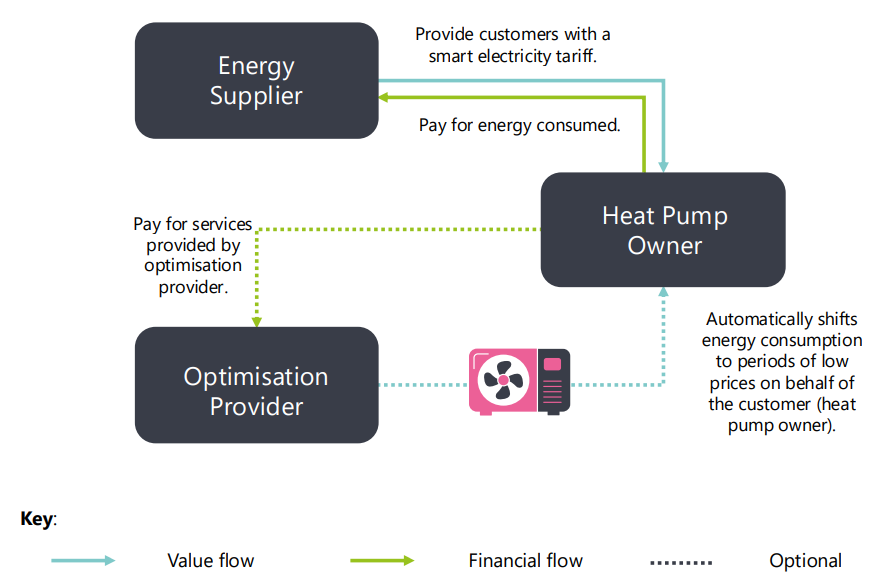
Energy suppliers provide heat pump owners with a ‘smart electricity tariff’ which charges them different costs for energy (on a p/kWh basis) at different times of the day.
Lower prices are usually observed in the early hours of the morning (4-6am) and the early hours of the afternoon (1-3pm).
The tariff prices are unlikely to be ‘fixed’ and will likely fluctuate in line with changes to the Energy Price Cap. However, the discount on energy may remain fixed (either as a percentage or a numerical value).
Heat pump owners may use an optimisation provider to control heat pump performance during different price periods on their behalf (at cost).

*Reductions observed compared to energy bills for heat pump households without a smart electricity tariff.

EDF Energy are launching a trial tariff which could allow heat pump owners to save more than £164 on energy annually. The ‘Heat Pump Tracker’ tariff offers six hours of low-cost electricity daily (at 4-7am and 1-4pm).
Unlike other smart tariffs, the tracker tariff does not charge a premium price during peak periods. Instead, it consists of three daily rates: A day rate (set based on the local area), the heat pump tracker rate (a 10p discount off the standard tariff rate in the region) and a daily standing rate.
The tracker tariff follows a flexible pricing model that adjusts in line with the Price Cap set by Ofgem. Unit rates are reviewed every three months but the 10p discount remains constant.
The tariff has no exit or tie-in fees, leaving customers to switch at their discretion.
The trial is currently accessible for heat pump owners that have an existing variable tariff with EDF Energy and have a smart meter installed.
EDF Energy. (2024). Unleash the power of your heat pump.
ESC is making this report available under the following conditions. This is intended to make the Information contained in this report available on a similar basis as under the Open Government Licence, but it is not Crown Copyright: it is owned by ESC. Under such licence, ESC is able to make the Information available under the terms of this licence. You are encouraged to Use and re-Use the Information that is available under this ESC licence freely and flexibly, with only a few conditions. Using information under this ESC licence Use by You of the Information indicates your acceptance of the terms and conditions below. ESC grants You a licence to Use the Information subject to the conditions below. You are free to:
You must, where You do any of the above:
These are important conditions of this licence and if You fail to comply with them the rights granted to You under this licence, or any similar licence granted by ESC, will end automatically.
Designed to aid Local Authorities in developing robust, evidence-based plans to enable Net Zero.
Already have an account? Login
 Guest preview of selected publicly available resourcesFull library of 1,000+ articlesCPD accredited e-learning coursesCase studiesDiscussion forum