
Electrically heated homes pay higher taxes than homes heated by gas boilers (per unit of energy consumed) because of greater levy costs.
Resource
Electrically heated homes pay higher taxes than homes heated by gas boilers (per unit of energy consumed) because of greater levy costs.
Experience Level:
Smart Client
Provided by: Energy Systems Catapult


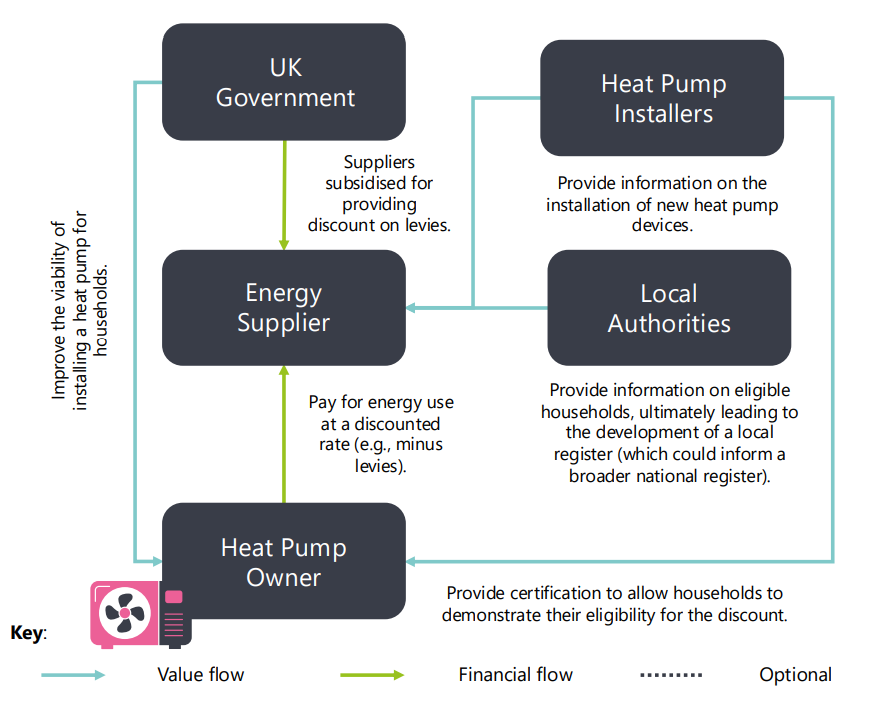
This model could address this challenge by providing a ‘Clean Heat Discount’ to electrically heated households.
For a predefined amount of electricity, eligible households would receive a discount on energy bills equal to the amount they would usually pay in levies.
The cost of implementing the scheme could be covered using wider UK Government funding aimed at increasing energy efficiency and tackling fuel poverty.
* E3G. (2024). Creating a heat pump mass market in the UK: Unlocking access to affordable clean heat.

* E3G. (2023). Make clean heat accessible to all: Options for lowering heat pump running costs.

E3G. (2024). Creating a heat pump mass market in the UK: Unlocking access to affordable clean heat.
E3G is proposing a targeted exemption of levies for electric heat users in the form of a ‘Clean Heat Discount’. E3G has calculated that an annual 3.5 MWh exemption of electricity for electrically heated homes could reduce running costs by around 15% for heat pump households and 5% for direct electric heating households.
Alongside sixteen other organisations, E3G have written to the UK Treasury calling on them to enact this proposal.
The levy exemptions could save consumers on average £130 a year.
At maximum uptake, the scheme could amount to £390 million a year for all electric heating — £90 million a year for heat pumps and £300 million for direct electric.
Applicable to all electrically heated households in Great Britain subject to eligibility testing.
| Heating type | Before levy discount (£) | After levy discount (£) | After smart tariff (£) |
|---|---|---|---|
| Gas boiler | 694 | 694 | 694 |
| Heat pump (COP 2.8) | 843 | 673 | 586 |
| Heat pump (COP 2.94) | 803 | 673 | 586 |
| Direct electric | 2,362 | 2,229 | 2,228 |
ESC is making this report available under the following conditions. This is intended to make the Information contained in this report available on a similar basis as under the Open Government Licence, but it is not Crown Copyright: it is owned by ESC. Under such licence, ESC is able to make the Information available under the terms of this licence. You are encouraged to Use and re-Use the Information that is available under this ESC licence freely and flexibly, with only a few conditions. Using information under this ESC licence Use by You of the Information indicates your acceptance of the terms and conditions below. ESC grants You a licence to Use the Information subject to the conditions below. You are free to:
You must, where You do any of the above:
These are important conditions of this licence and if You fail to comply with them the rights granted to You under this licence, or any similar licence granted by ESC, will end automatically.
Designed to aid Local Authorities in developing robust, evidence-based plans to enable Net Zero.
Already have an account? Login
 Guest preview of selected publicly available resourcesFull library of 1,000+ articlesCPD accredited e-learning coursesCase studiesDiscussion forum