
This study focuses on the experiences in Germany and how intermediaries, such as craftsmen, architects, and energy advisors, can influence how people make decisions on retrofitting their homes to make them more energy efficient.
Resource
This study focuses on the experiences in Germany and how intermediaries, such as craftsmen, architects, and energy advisors, can influence how people make decisions on retrofitting their homes to make them more energy efficient.

Provided by: Midlands Net Zero Hub


The influence of intermediariesΓÇÖ advice on EE-retrofit decisions in private households
This study focuses on the experiences in Germany and how intermediaries, such as craftsmen, architects, and energy advisors, can influence how people make decisions on retrofitting their homes to make them more energy efficient.
It also investigated the relative impact of these intermediaries compared to other commonly known drivers and barriers for such retrofit-related decisions, such as the cost of retrofit measures, types of financing available, and energy cost savings.
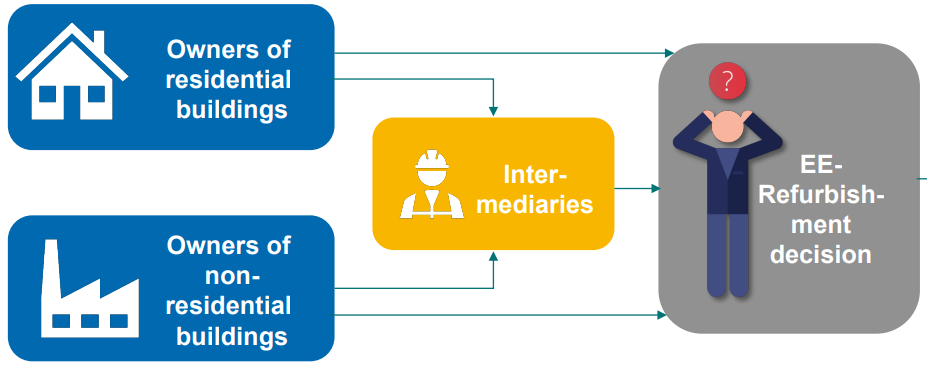
After preliminary interviews were conducted (with homeowners and intermediaries) to discover relevant factors in retrofit decisions, the following research involved 96 participants and was carried out through interviews and an online study. It identified five impact factors that can influence the decision-making process of those considering retrofitting their homes:
These then led to the identification of their most relevant decision criteria; differences between experienced renovators and non-renovators; and people's preferred EE-retrofit features.
The study concludes that intermediaries, particularly craftsmen, play a significant role in influencing EE-retrofit decisions in private households. Key findings include:
Intermediaries' influence: The recommendation of intermediaries, especially craftsmen, has a higher impact on retrofit decisions than financial factors like cost and type of financing.
Intermediary type: Craftsmen are involved in almost all retrofit projects and have the greatest influence overall on both the decision to retrofit and the design of the retrofit measures. However, in relative terms, once architects or energy advisors are involved, they have a more influential role in the specific EE-refurbishment project.
Importance of certification: Homeowners prefer EE-certified craftsmen and reject non-EE-certified craftsmen, indicating that certification builds trust and is crucial for influencing retrofit decisions.
Financial factors: While financial aspects like personal savings and subsidies are important, they are secondary to the recommendation of intermediaries. Bank loans are generally rejected for financing EE-retrofits.
Policy implications: To increase retrofit rates and quality, policy interventions should target craftsmen by providing further training and support. This would help craftsmen become more knowledgeable and effective in promoting EE-retrofits.
Complexity and satisfaction: Even experienced renovators find EE-retrofits complex and rely heavily on intermediaries for guidance. Overall, homeowners are satisfied with their retrofit projects and recommend EE-retrofits.
Energy advisors: Energy advisors have a lower influence compared to craftsmen, and non-certified energy advisors are particularly rejected. This suggests a need for better transparency and quality standards in energy advisory services.
Designed to aid Local Authorities in developing robust, evidence-based plans to enable Net Zero.
Already have an account? Login
 Guest preview of selected publicly available resourcesFull library of 1,000+ articlesCPD accredited e-learning coursesCase studiesDiscussion forum