
A utility PPA is a bilateral agreement between a generator (asset owner) and an energy supplier (or other balancing responsible party).
Resource
A utility PPA is a bilateral agreement between a generator (asset owner) and an energy supplier (or other balancing responsible party).
Provided by: Energy Systems Catapult


A utility Power purchase agreement (PPA) is a bilateral agreement between a generator (asset owner) and an energy supplier (or other balancing responsible party). It is sometimes referred to as a ‘Merchant PPA’ or ‘Export PPA’.
This model could be enacted by local authorities as follows:
|
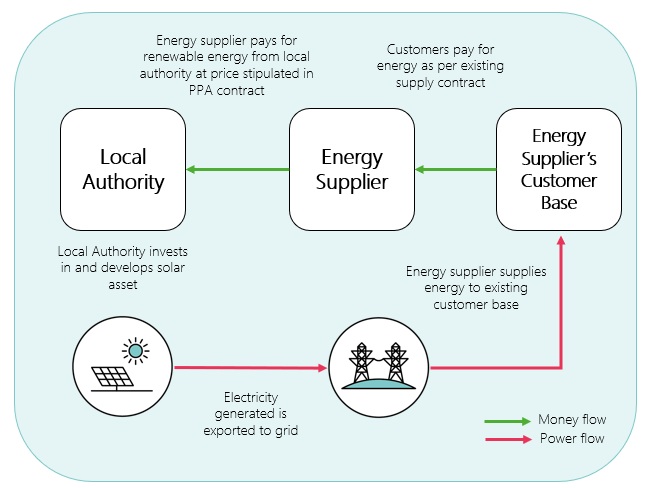 |
The generator is paid a set p/kWh for all generationover a fixed term. The price may be flat tariff or time-of-day/season tariff.
The pass through of any embedded benefits or costs will be detailed in the PPA and should be reviewed.
ESC is making this report available under the following conditions. This is intended to make the Information contained in this report available on a similar basis as under the Open Government Licence, but it is not Crown Copyright: it is owned by ESC. Under such licence, ESC is able to make the Information available under the terms of this licence. You are encouraged to Use and re-Use the Information that is available under this ESC licence freely and flexibly, with only a few conditions. Using information under this ESC licence Use by You of the Information indicates your acceptance of the terms and conditions below. ESC grants You a licence to Use the Information subject to the conditions below. You are free to:
You must, where You do any of the above:
These are important conditions of this licence and if You fail to comply with them the rights granted to You under this licence, or any similar licence granted by ESC, will end automatically.
Designed to aid Local Authorities in developing robust, evidence-based plans to enable Net Zero.
Already have an account? Login
 Guest preview of selected publicly available resourcesFull library of 1,000+ articlesCPD accredited e-learning coursesCase studiesDiscussion forum