The Midlands Net Zero Hub partnered with the Royal Agricultural Society for England (RASE) and Innovation for Agriculture (IfA) on a pioneering study outlining how UK farming can respond to climate change.
The Farm of the future: Journey to Net Zero report sets out a vision for decarbonising agriculture and shaping policy to enable farmers to continue their multi-generational work and support a healthier, more resilient, and nature‑friendly food supply system. It highlights key areas for action, including:
- Emerging digital and robotic technologies.
- Environmental resource management.
- Low‑carbon energy.
- Low-emission farm vehicles.
Report summary
The Farm of the future: Journey to Net Zero report sets out a comprehensive vision for how UK agriculture can support national decarbonisation, emphasising the crucial role farmers play as stewards of a large proportion of the country’s land. It highlights that achieving Net Zero in agriculture requires systemic change across land management, energy systems, and supply chains. Central to the report is the importance of improving soil health through regenerative farming practices – such as minimising soil disturbance, maintaining soil cover, and increasing plant diversity – which enhance carbon sequestration, biodiversity, and long‑term farm resilience.
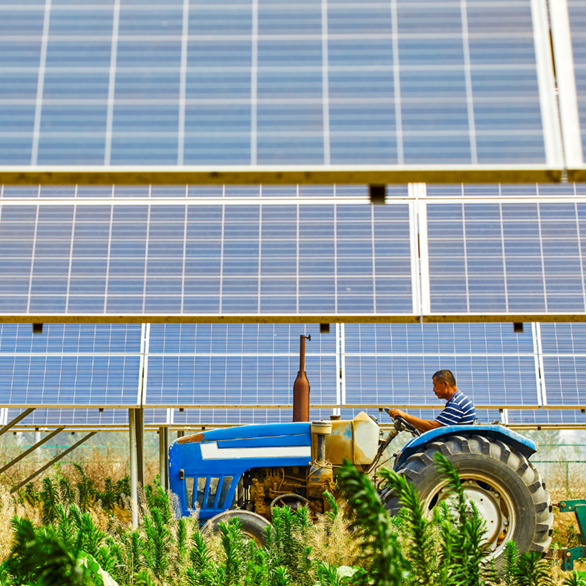
The report also presents a wide range of technological and energy‑related solutions already available to farmers, including precision agriculture, robotics, methane‑reduction innovations, and a shift toward renewable energy sources such as solar PV, wind power, and anaerobic digestion. These transitions help reduce dependence on fossil fuels and prepare farms for the phase‑out of high‑carbon fuels like diesel and heating oil.
Importantly for local authorities, the report positions agriculture as a key part of place‑based Net Zero strategies. Farming intersects directly with wider local priorities such as biodiversity recovery, water stewardship, food security, rural economic resilience, and the expansion of low‑carbon energy infrastructure. It encourages collaborative approaches in which councils, landowners, communities, and supply chains work together to reshape rural systems and promote circular, low‑waste resource flows. In doing so, the report presents farming not only as a sector needing support, but as a strategic partner capable of driving nature recovery, emissions reduction, and green economic growth at a regional scale.
Some key points from the report
- Regenerative land management is essential for restoring soils, sequestering carbon, and enhancing biodiversity across rural landscapes.
- Farms can rapidly cut emissions by adopting renewable energy, low‑carbon heat options, and smart digital energy systems.
- Innovation – including robotics, precision treatments, and methane‑reduction technologies – will drive major efficiency and emissions gains.
- Circular resource‑use models and reduced food miles support both environmental benefits and local economic resilience.
- Effective policy alignment and local support structures are crucial for helping farmers transition at scale.




 Guest preview of selected publicly available resources