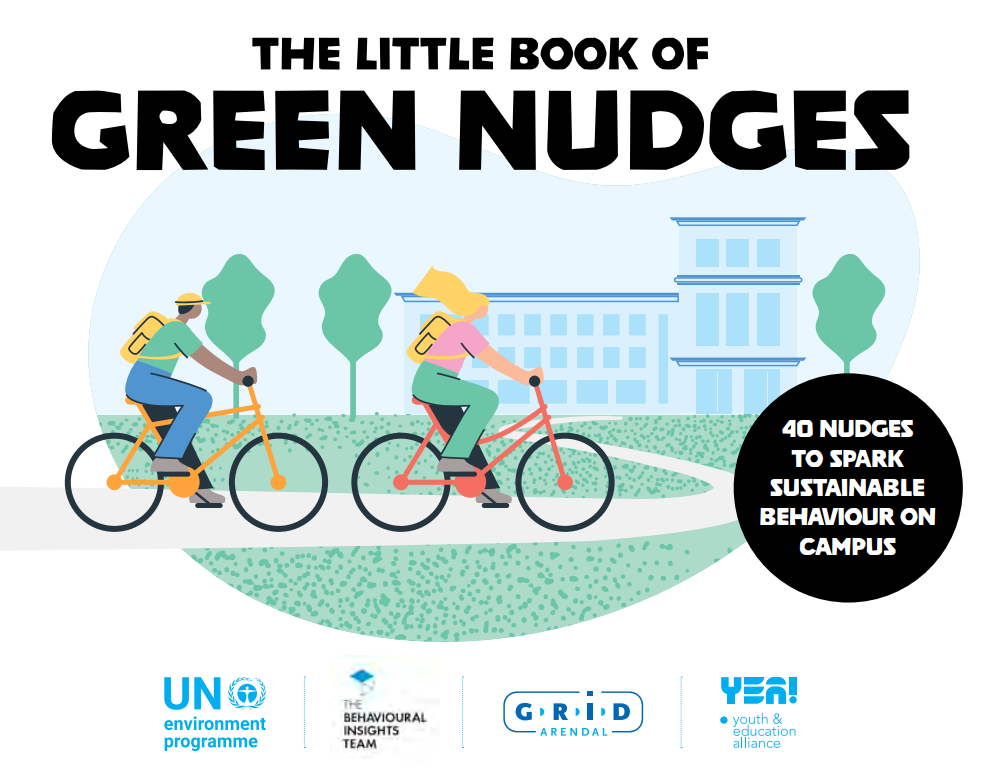
The Little Book of Green Nudges is UNEP’s first on behavioural science and nudge theory, which focuses on human actions and how to change them, and was drafted with The Behavioural Insights Team (BIT) and GRID-Arendal.
It contains 40 ready-made nudges – simple measures that make it easier to make green choices – which university campuses can deploy to encourage students and staff to embrace more sustainable behaviours. The guidance is also based on BIT's EAST Framework (make things: Easy, Attractive, Social, and Timely).
Nudging can be a powerful tool at universities, especially when deployed alongside strategies like decarbonising and divesting from fossil fuels.
The Little Book of Green Nudges contains evidence-based guidance on implementing nudges, centred around techniques such as resetting default options, changing the framing of choices, and harnessing social influence. It also includes case studies of nudging interventions rolled out at universities from Thailand to Kenya, Finland, and Colombia.
"A key tenet of a successful nudge is the timing of the intervention. When better to intervene than during students’ formative years on campus? Higher education institutions are the incubators of our future entrepreneurs, decision-makers and trendsetters, and of their increasing consumer power."
Examples of nudges recommended in the book include:
- Food: Using appealing descriptions for plant-based dishes, for example “spicy chickpea curry”. A study in a university cafeteria found that describing vegetables in indulgent terms resulted in 25% more diners choosing them.
- Recycling: Making recycling bins eye-catching and easy to use. One study found that bins with specialised lids increased the recycling rate for beverage containers by 34%.
- Waste: In cafeterias, offering smaller plates and no trays, to discourage food waste. A study conducted in a university dining hall found that going trayless led to a significant decrease in solid waste.
- Transport: Encouraging cycling by making it easier to park bicycles, while at the same time making it more of a hassle to park cars, for instance by requiring people to frequently reapply for car parking permits.
- Sharing: Setting up a system to share leftover food from meetings or events. A group of students at one university set up a food-sharing group that has prevented more than 7,000 kg of food from going to waste.


 Guest preview of selected publicly available resources